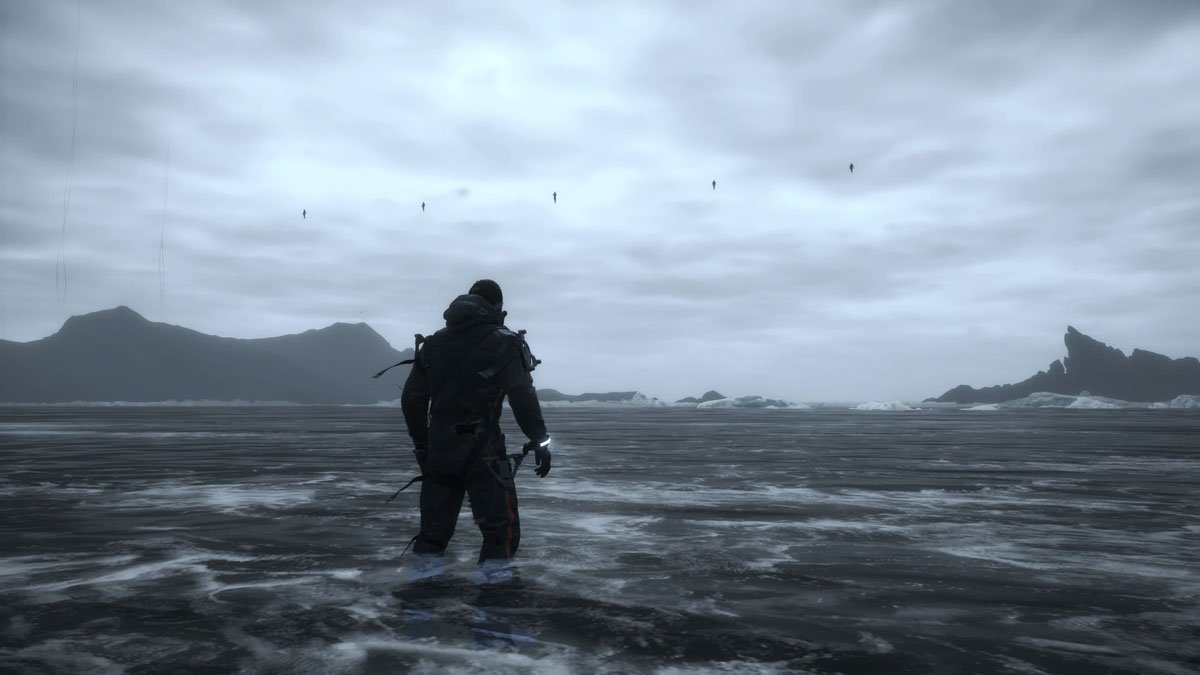
I hear people say “it’s a love it or hate it game.” I am not sure.
I loved it and it frustrated me to a painful level at the end because it did not give me a sense of closure.
You have to love story for the game to hook you, because at the start, that is pretty much all you get. For the first 2 hours, gameplay is sparse, but the cinematics are dramatic, and the world breathtaking. Having watched the trailers before the release, I expected nothing less. Instantly, I dive into a world where life and death are carefully intricated. Whatever happened, it plunged civilization into a post-apocalyptic gloom and the living are staggering to recover.
Fragile is one the first NPC we meet and she introduces us to the lore and its rules, Timefall, Cryptobiotes, Chiral Allergy. There is a lot to memorize and pay attention to, but Sam and I are fully dedicated to our task. After meeting with the threat and getting out intact, I am given a baby in a bottle for company and to help me anticipate and prevent my next encounter with BTs (Beached Things, specters that are left stranded in the world of the living) but the pace lets me down. For the next 20 hours, the story I am introduced to takes the back seat and I am left to starve. So many questions have been handed to me, I had to understand what the hell happened on that beach. Why was I a Repatriate (someone able to come back from the Seam, a mysterious beach that joins the world of the dead and the living)? Why is the world ravaged and people scattered, disconnected? Mostly, how do we solve this?
As I progress, I’m only given more questions, characters’ arcs start to pile up with every new NPC: Die Heartman, Amélie and her cause, Cliff and his nightmares, Big Mama and her BT baby. I have more and more questions to memorize and I struggle to connect their individual stories while my main plot, the initial incident, the cause of the Death Stranding stalls and the stakes are slipping away from me.
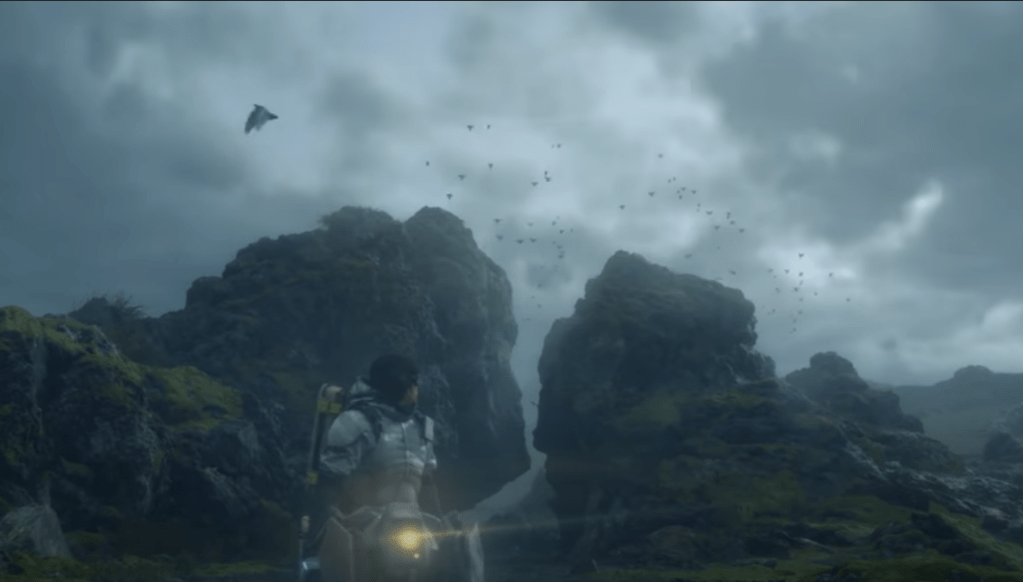
In total it took me a bit more than 50 hours to finish the game. I did very few side missions, I strolled, I hate vehicles so I barely used them. Here, in real life, we were in lockdown, I love to hike, this was perfect, it was my escape, the music was powerfully atmospheric, the landscapes reminded me of the highlands and my beloved Skye, the immersion was total, the mystery of the beach hooked me right up from the start. The game, as compared to what exists today on the AAA market, has very little violence in it, it has a dark background story that is slightly (erm) reminiscent of the ecological crisis we are living through. I related to it and I related to Sam. I’m an introvert, I like to be alone, I like to walk in the wild and let my thoughts carry me away until I reach a summit and pause to absorb the beauty of it with great relish.
If I am not the target audience, who is?
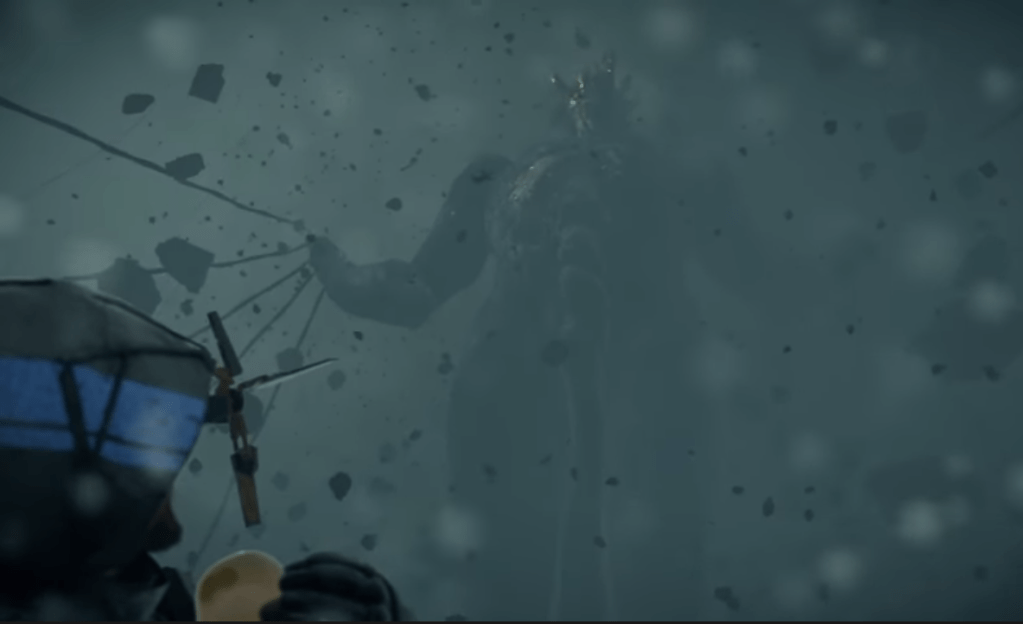
The first 10 hours went like a charm! I was back in the mountains, alone, in peace, I was doing good by delivering neatly packed gears to folks who needed it. There was a wonderful character that I got introduced to with a slick umbrella, and together we held our breath to hide away from this unknown, strange and gooey thing that tried to kill us. This giant handed creature perfectly incarnated the ecological nightmare that awaits in the dark, where no one wants to look.
As I travelled to the West Coast to finish what Amélie couldn’t, I felt the same sense of slow pace and reflection that I experienced on my long hikes, I loved the silence and the occasional Helloooo! from distant holograms. I felt a sense of gratitude toward my fellow delivery pals for the climbing anchor they planted and left behind. I myself started to pack a little more than I needed so that I could participate to the reconstruction effort. Drop some ceramics here to build a road, or lay the spare ladder there to make our return back home a little bit easier. Once in a while I would be reminded of my good deeds. The notification told me how many people used the ladder or the road and I felt rewarded. I got that sense of unity by working with invisible players towards the same goal.
But when I crossed the areas of Timefall (a form of acidic rain that ages everything it touches), I was reminded of something else. The tone shifted from exuberant carpets of moss to dry and toxic no man’s land imbued with eerie specters. Timefall and the tarry goo were like wounds left by the cataclysm that ravaged our Earth. I felt I was stepping into the exclusion zone of Chernobyl. Walking with my hood on amongst the granite rocks, and seeing the rust gnaw at the slick and shiny cases on my back, I felt contaminated and I remembered the bleak and brilliant adaptation of HBO and Sky. Chernobyl is born of human error, societal malfunction, us trying to bite more than we can chew and being reminded of the forces we play with. Was it the same with the voidouts? Did we break something in the land and the weather, break it to the point that it forced us into isolation? All I am told is that all this is the consequence of the Death Stranding but what is it? What caused it? There is a rich background underneath the surface that I hoped to gradually uncover as it was my role to try and reconnect the land and its inhabitants.
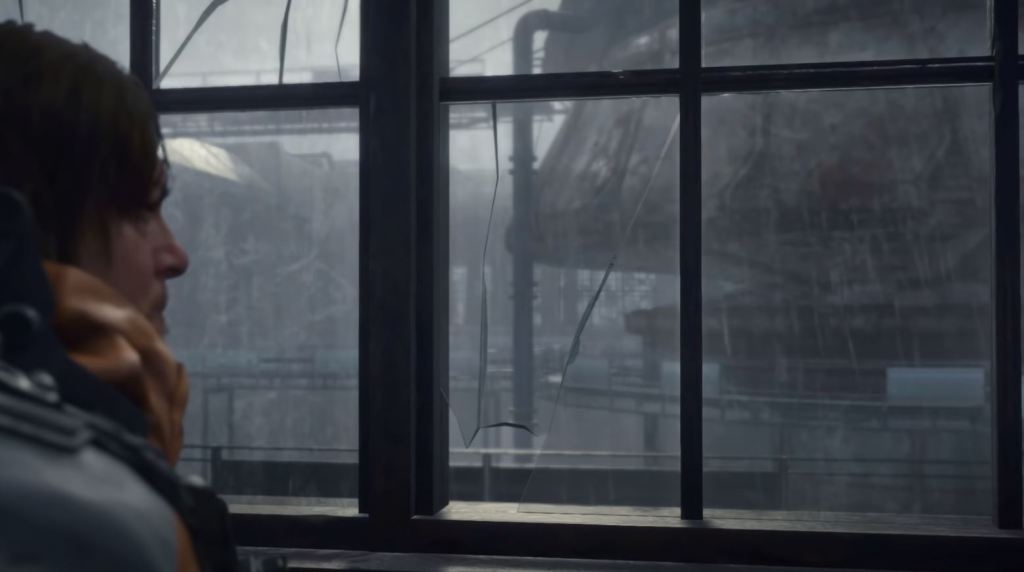
As I progressed though, I learned nothing that helped me understand the catastrophe, instead we focused on a very archetypical villain Higgs, his actions and his threats. My taxing journeys through the land, feeling weary, invited questions of Nature and man-made chaos that vastly surpassed every threat Higgs was trying to make me care about. It made me ponder our societal dysfunction, transporting me from awe inspiring landscapes to nightmarish horror.
In a way, I felt my perseverance was tested the same way than when I was in the mountains and it was hard and I was tempted to turn back. The issue was, this is a game and turning back is very easy. It’s one button away. The temptation was great, especially when I reached a shelter and instead of feeling a sense of reward, I had to endure superficial, unnecessary dialogues which would answer none of my questions. I expected to learn about what happened more gradually, immerse myself into the intrigue at a pace that would fit that of my journey. Slow, but with a sense of progress, peaks and valleys. These islands of dialogues in the game between the initial 2 hours of cinematics and the encounter with Heartman in his massive alpine spa house frustrated and bored me. I felt I was not given anything to feed my curiosity, in the contrary the initial valuable information was being buried under secondary loosely connected stories. I had to power through cascades of tangled monologues from Die Hardman mixed with supposedly funny yet ineffective trash lines from random inhabitants. It felt like lines were thrown at me to keep me waiting, as if having dialogues in itself could carry me. They should have given me something interesting or kept it quite.
Eventually, Heartman tells me about the previous extinctions and there, he throws me a lifeline. I am with him again, I relate to the issue that I had merely forgotten and I feel what’s at stake. It hits very close to home, and I want to know what is that message that Kojima is wrapping in so many confusing layers of blather. I know now what he wants to question: our connection to others, the climate crisis, the horrors of war, our propensity to repeat the same mistakes over and over again, but what’s his resolution?

Not yet. I have to walk again through snow and craggy peaks. The survival aspect is more present now than ever in the cold. Even if I wanted to use fancy bikes now they wouldn’t carry me that far. I walk and I worry about my next step and the state of my shoes. I cannot fall, or I will never pick this up again. Thankfully my invisible partners in this venture have started to build a network of ziplines and I am eager to do my part so we can all eventually get there. I pack a bunch and move on.
Technology is our way to support each other. Working together in parallel planes, we build roads through jagged terrain and bridges over daunting rivers, but soon unused sturdy trucks start to spoil the environment, again. “Keep on keeping on” says a sign left there at the foot of the mountain to encourage me. How ironic is that? I too left a truck there to rot, and it felt terrible, like that loop of memories in which Cliff is trapped and in which BB pulls me. Is our unshakable resolve to carry on with our ways the greatest threat to our world and our very survival?
In the end, there is still so much that I don’t fully understand. It seems the lore created is so rich and throughout the game I have to learn its language Seam, DOOMS, Strands, Voidouts, Chirilium. Some of it contributes to the immersion in the futuristic world and its tech, but some of it remains confusing throughout.
At the end of the game, my main frustration remains the plot. The resolution felt shallow in the face of a catastrophe that felt so real. It did not live up to the expectations the core gameplay loop had me build over long hours of meditative walks, where I pondered the nature of death and our society’s excesses. When I thought I was starting to unfold the Death Stranding‘s mystery and the relationship between myself, my BB and its biological father, everything started to blur. I was shoved layers of convoluted details and the increased complexity of the story was the one route I was not given the tools to navigate. That intrigue I invested so much in, struggles to resolve itself and there is much left either unanswered or oversimplified.
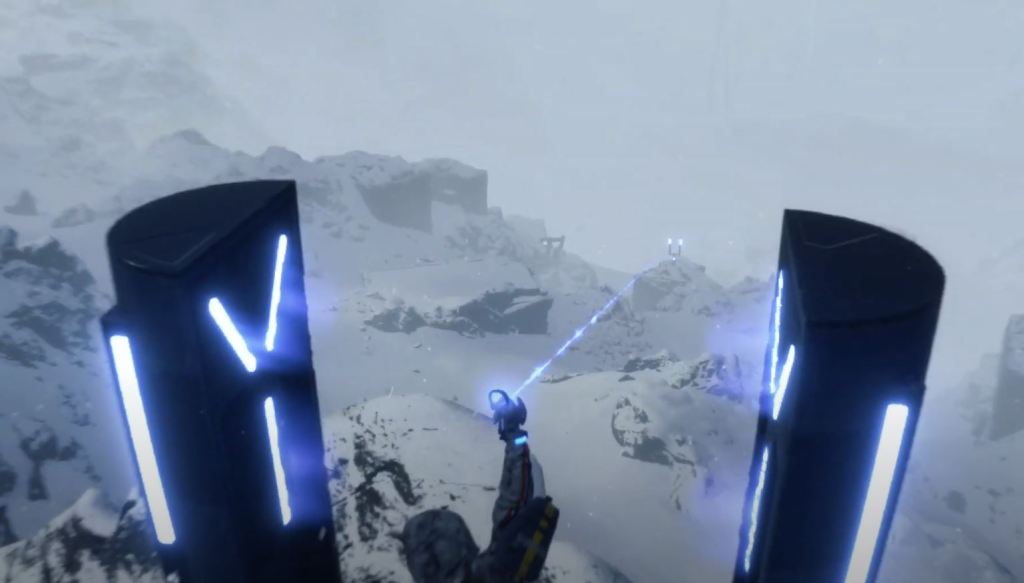
However, looking back with the immediate frustration gone, I realize the plot did not matter that much. The narrative arc the team has carefully crafted does not add to the game message. At times it’s even distracting in comparison to the story the gameplay and the art are telling. The game remains an artistic, poignant, and jarring experience, strongly rooted in a political and social message. For the narrative part, you have to learn to let go. There is space for your own narrative in that world and that is what you should invest in.
The most powerful message I got from Death Stranding – and it still lingers at the back of my head – is that even when you’re gone, the consequences of your actions remain. It is our responsibility to think about what legacy we want to leave behind for the next generations and those who survive. The game teaches us about balance, it is our one constant preoccupation from start to finish. When that balance is tipped off, consequences have to be dealt with, crucial pieces of the world may be gone forever and while playing, you absolutely feel that. When the journey is so grueling it makes you care. When you hesitate and doubt so much to carry on, when your BB starts to cry through the controller because you fell, it makes you care. But you get back up, and you keep on keeping on.
Death Stranding is an experience of unity and perseverance. No matter how big the task, it gets accomplished one careful step at a time and every contribution matters. If we all walk in the same direction, if we support each other and pick up what someone else left off, then everything can be rebuilt.
 Amélie Beaudroit
Leave a comment